A Nanoscience Mystery Inside a Critical Mineral
by Lindsay Borthwick
An atomic-scale look at resilience could guide sustainable use of rare-earth elements.

The Author
The Earth contains a bewildering variety of minerals that endure extreme conditions over geologic time. Some of these deposits weather away, while others persist.
One source of stress on minerals is radiation from within, in which radioactive elements embedded in some minerals release energy that displaces atoms, creates defects and — over time — destabilizes their crystal structures. The reverse is also true: Some minerals can repair these defects through a process called annealing.
Geologists can recognize the telltale signs of radiation damage and annealing in minerals encountered in the field. What’s still unclear is how these processes unfold at the scale of atomic bonds, where damage and repair happen.
A new Kavli-supported collaboration between geologist Karl Lang of the Georgia Institute of Technology and chemist Claudia Avalos of New York University will probe that scale by focusing on a rare-earth-bearing mineral called monazite. By watching how its atomic structure responds to radiation damage, Lang and Avalos hope to discover fundamental mechanisms of damage and repair that may apply to critical minerals and materials.
“With this project, there’s the potential to observe something that people truly have never seen before,” said Lang.
The research team was one of eight to receive an award from the Research Corporation for Science Advancement, the Alfred P. Sloan Foundation and The Kavli Foundation through the 2025 Scialog®: Sustainable Metals, Minerals, and Materials.
Scialog® is an amalgam of “science + dialog.” The program is designed to spark conceptual jumps and scientific progress on problems of global importance through small-group conversations and a culture of “what if we tried this?”
The 2025 meeting brought together more than 50 early career scientists from diverse disciplines to discuss how to mitigate the environmental impact of minerals and materials essential to clean energy technologies.
Monazite’s puzzle
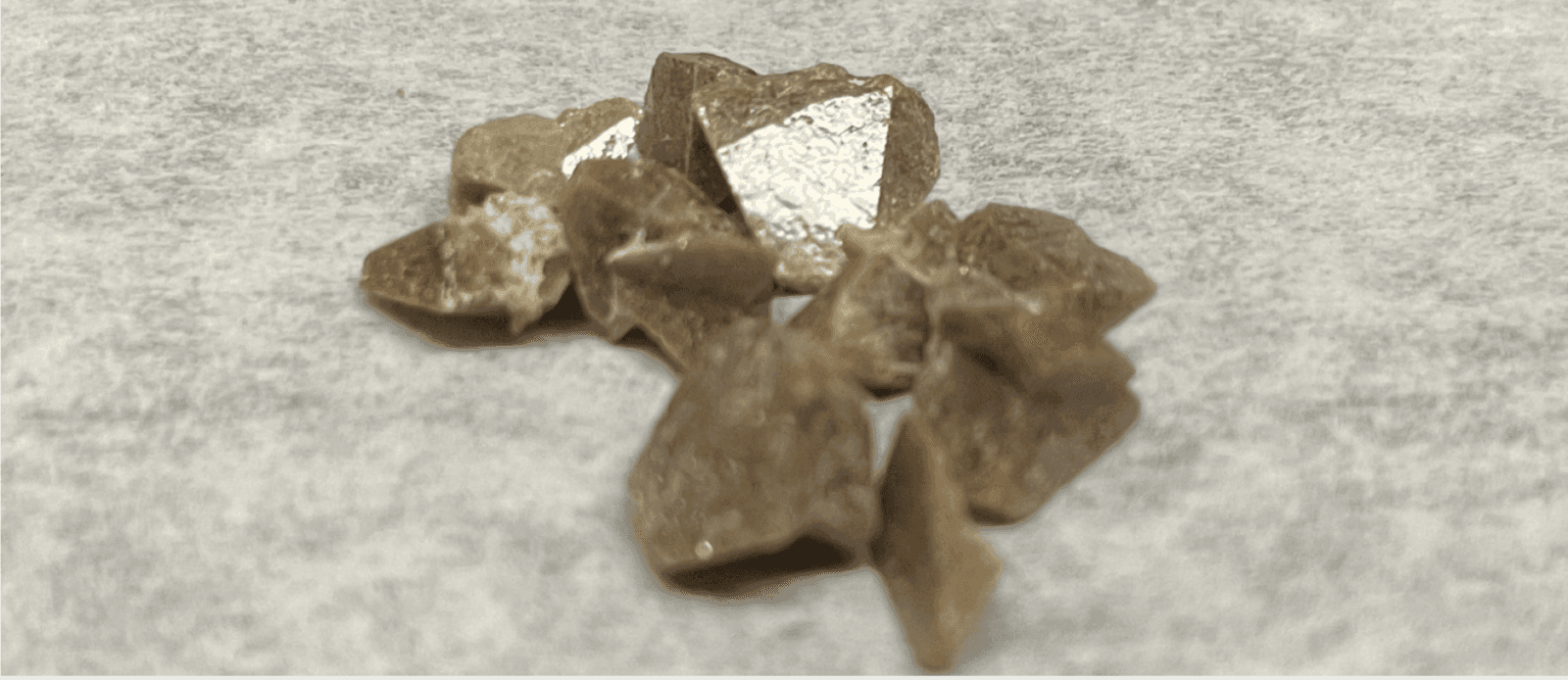
Monazite is a radioactive phosphate mineral that can harbor rare earth elements, materials classified as critical because of their importance to clean energy, electronics and national supply chains. Scientists also use monazite to date rocks, in part because it incorporates radioactive elements.
What makes monazite so intriguing is that it seems to defy expectations. Because it incorporates radioactive elements, the mineral is continually exposed to internal radiation damage — energy that should, over time, disorder its structure. And yet, compared with many other minerals, it often remains remarkably stable.
Geologists have documented this resilience for decades but without a clear explanation for how it happens. “It’s something we’ve always observed,” Lang said, “and no one has had a really good explanation for it.”
The collaboration between Lang and Avalos aims to move that long-standing observation from description to mechanism.
“What’s remarkable is that there are still fundamental nanoscience mysteries in materials that are so critical to modern technology,” said Jeff Miller, science program officer for nanoscience at The Kavli Foundation. “Will understanding this kind of atomic-scale resilience lead to step-changes in how we process rare earth minerals or even inform the design of more durable materials for sustainable nuclear technologies? We don’t know. That’s exactly why this kind of basic research is so important.”
To look for answers at the level of bonds, the researchers will use solid-state nuclear magnetic resonance, which can resolve local atomic changes that conventional analytical methods tend to miss. As Lang put it, without that atomic perspective, studying radiation damage is “like looking at a painting but not seeing the brush strokes.”
Avalos added, “Solid-state magnetic resonance sees what’s invisible to many other methods.”
A Scialog® collision
A single conversation sparked the collaboration. Avalos realized that advanced magnetic resonance methods might make it possible to study a class of materials she hadn’t worked on before. Lang saw the chance to look at a familiar geological process in a way people in his field rarely can.
“There are very few labs that have the specialization to do these measurements,” said Avalos. “As Karl gives us samples with different annealing conditions, we’re hoping we can see how the atomic fingerprint changes.”
That kind of atomic-level understanding has long-term relevance beyond geology. Monazite is just one example of a broader class of critical minerals whose environmental and technological importance are growing. Understanding how these materials respond to stress at the atomic scale lays the groundwork for handling them more predictably and sustainably.
But the collaboration’s most honest promise is also its most motivating one: The researchers don’t know what the answer will be.
“That’s rare, unfortunately, in science,” said Lang. “And that’s exciting because that’s why we get into research in the first place.”